Azure Database for PostgreSQL flexible server
Prerequisites for DBtune agent setup
Network access
-
Please ask your infosec department to whitelist the following URL for external access:
https://app.dbtune.com. -
Ensure, your client host can communicate to the Azure Database for PostgreSQL flexible server.
Permissions
Your Azure account must have sufficient privileges at the Resource group or Subscription level to modify server parameters and manage RBAC role assignments.
Steps to install the DBtune on Azure Database for PostgreSQL flexible server:
Step 1
Choose the authentication method that matches your Azure Flexible Server configuration:
PostgreSQL authentication
Connect to your database using psql. Replace azure_db_instance with your Azure Flexible Server name and your_db_name with your database name:
psql -h <azure_db_instance>.postgres.database.azure.com -p 5432 -U postgres <your_db_name>
Create a new DB user dbtune_agent with a password and assign it the pg_monitor role:
-- Skip this if you already have a PostgreSQL user you would like to use for the DBtune agent
CREATE USER dbtune_agent with PASSWORD '<Strong password>';

GRANT pg_monitor TO dbtune_agent;
Microsoft Entra authentication
If your Azure Flexible Server is configured to use Microsoft Entra authentication, no new database user is required. Connect using your Entra-authenticated session and grant pg_monitor directly to your Entra identity (managed identity display name or Entra user):
-- Replace <entra-username> with your managed identity or Entra user display name
GRANT pg_monitor TO "<entra-username>";
Step 2
Next, enable the pg_stat_statements extension on the Azure portal .
Login to Azure portal → Go to your Azure Database for PostgreSQL flexible Server.
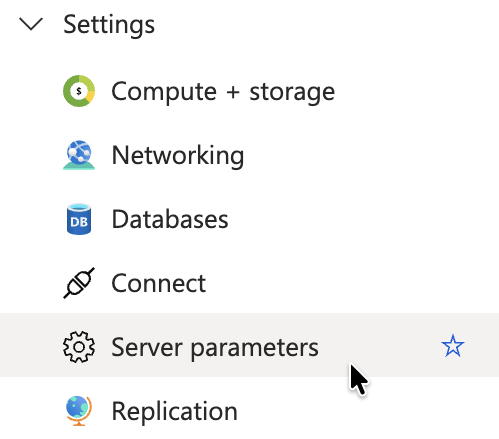
In the left panel, navigate to Server parameters under Settings
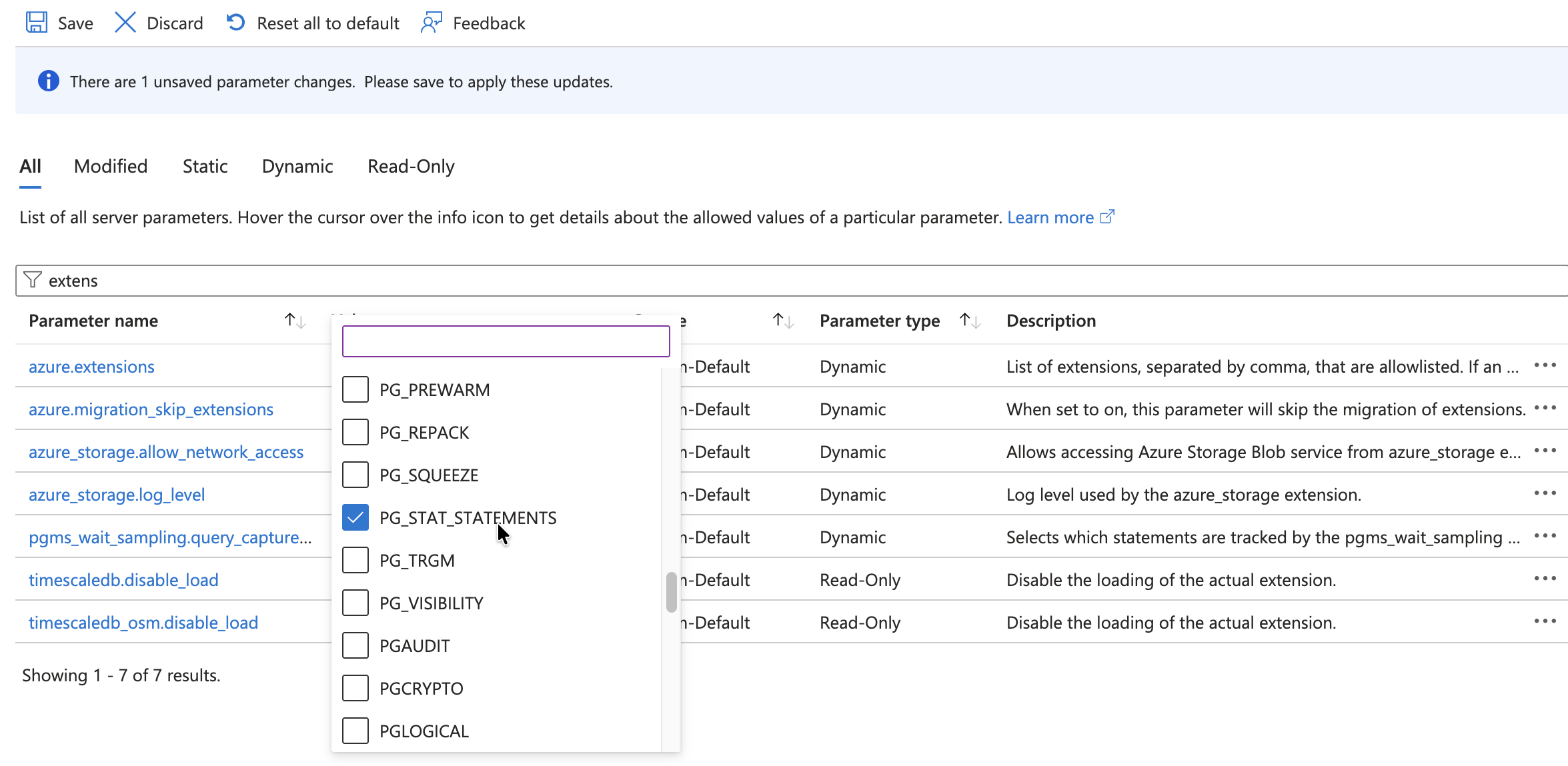
Search for "extensions" and select PG_STAT_STATEMENTS under azure.extensions. Click Save:
Alternatively, you can run it through Azure CLI:
az postgres flexible-server parameter set \
  --resource-group $RG \
  --server-name $SERVER_NAME \
  --name azure.extensions \
  --value pg_stat_statements
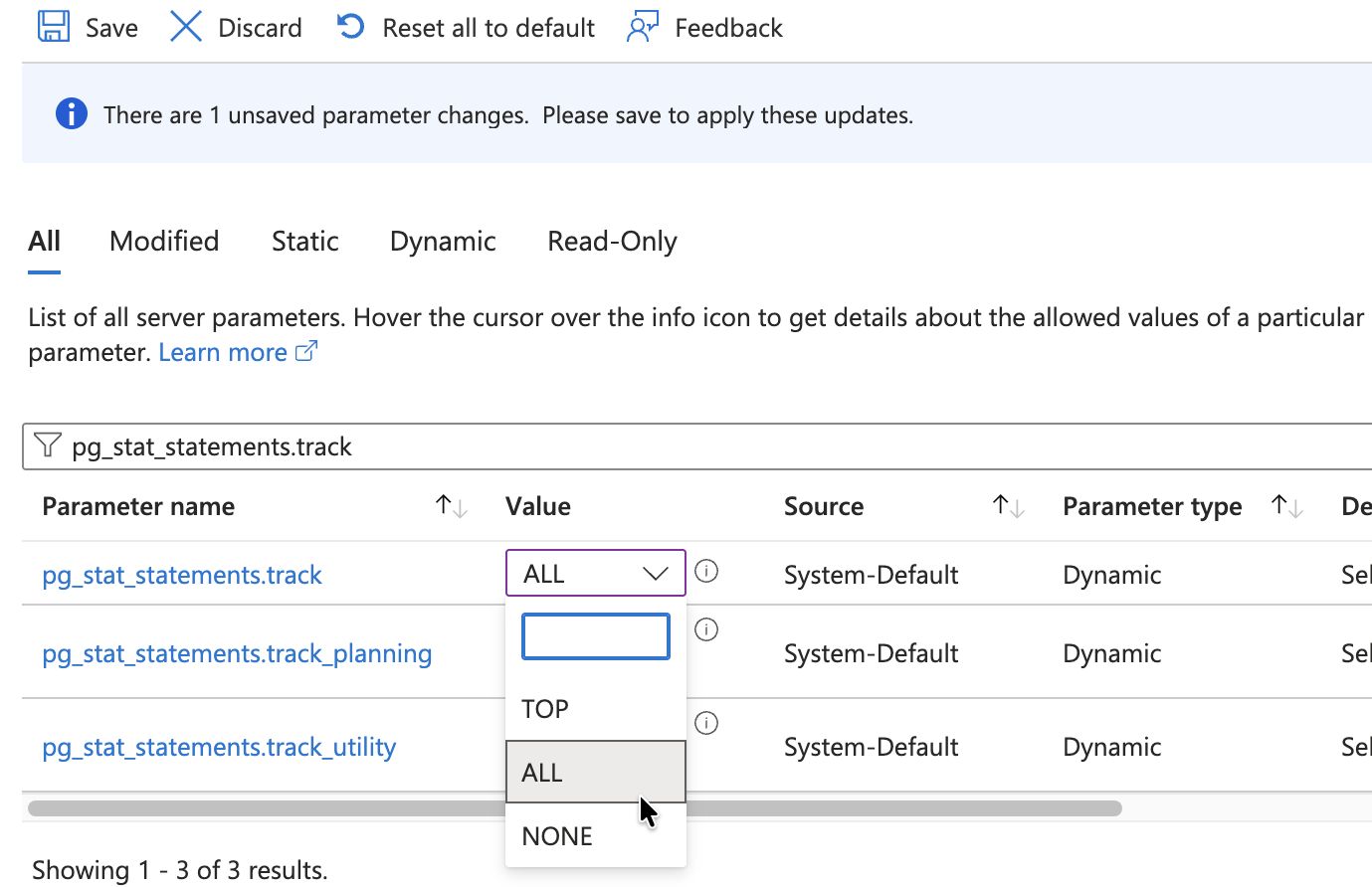
Next, enable pg_stat_statement.track by setting it to either ALL or TOP and Save. DBtune works with both options:
You can enable it through Azure CLI:
az postgres flexible-server parameter set \
  --resource-group <your-resource-group> \
  --server-name <your-server-name> \
  --name pg_stat_statements.track \
  --value top
Next, create the extension on the database. Go back to your psql session.
Create the pg_stat_statements extension in your default database. This database will be referenced in the connection_url configuration inside dbtune.yaml.
CREATE EXTENSION IF NOT EXISTS pg_stat_statements;
Managed identity and permissions:
The DBtune agent communicates securely with the Azure Resource Manager (ARM) API through Managed identity, which provides password-less security. It authenticates with Microsoft Entra ID, so you don't need to store credentials.
Next step is to enable managed identity on the client machine where you'll install the DBtune agent.
Step 3
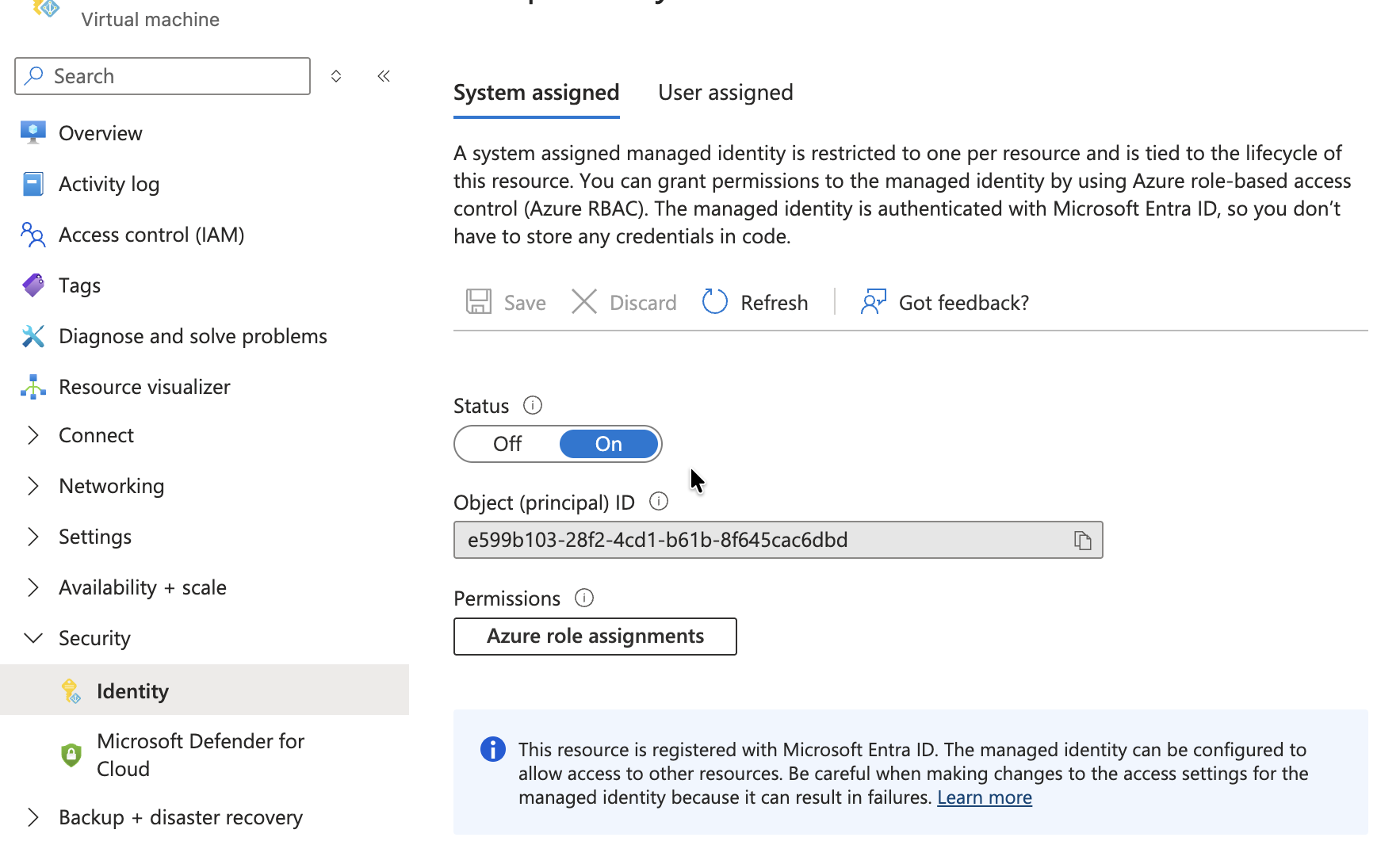
Go to Azure portal, On your Azure VM, navigate to Security → Identity and check whether System assigned identity is enabled.
If it's not enabled, enable System assigned and click Save.
you can also assign it through Azure CLI:
az vm identity assign \
  --resource-group RG_VM \
  --name DBtuneVM
Step 4
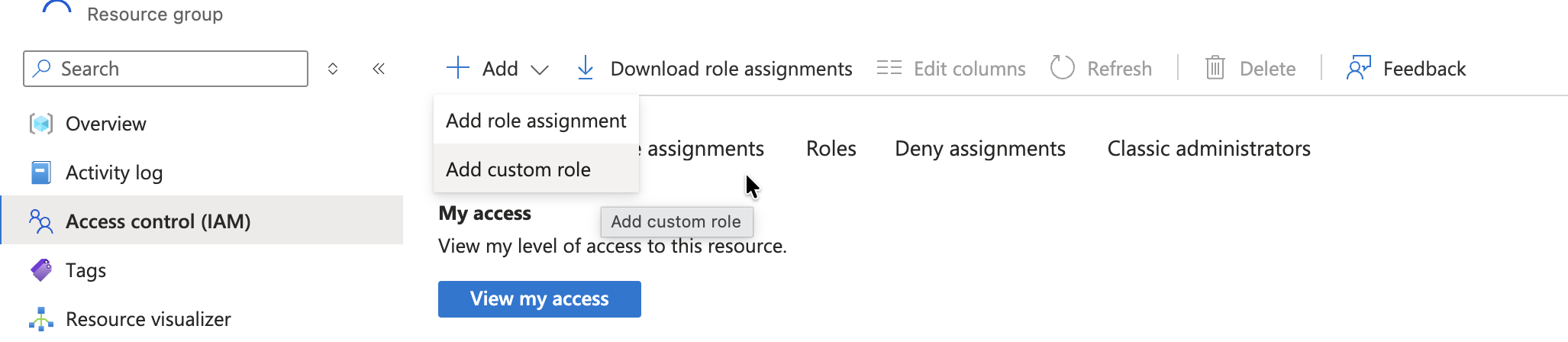
Navigate to Azure Database for PostgreSQL flexible Server Resource Group. Open Access control (IAM) and create the Custom role here. This ensures the agent has the necessary permissions to manage the database, regardless of where the VM is located.
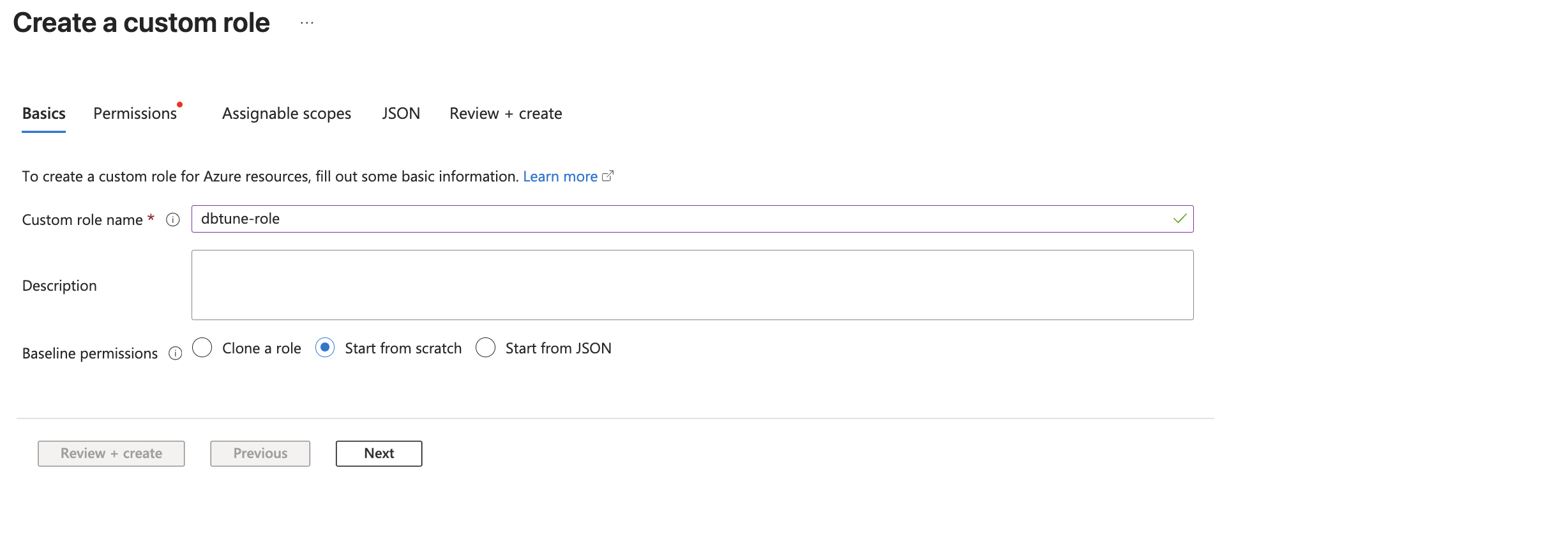
Set the unique name for the custom role and click Next:
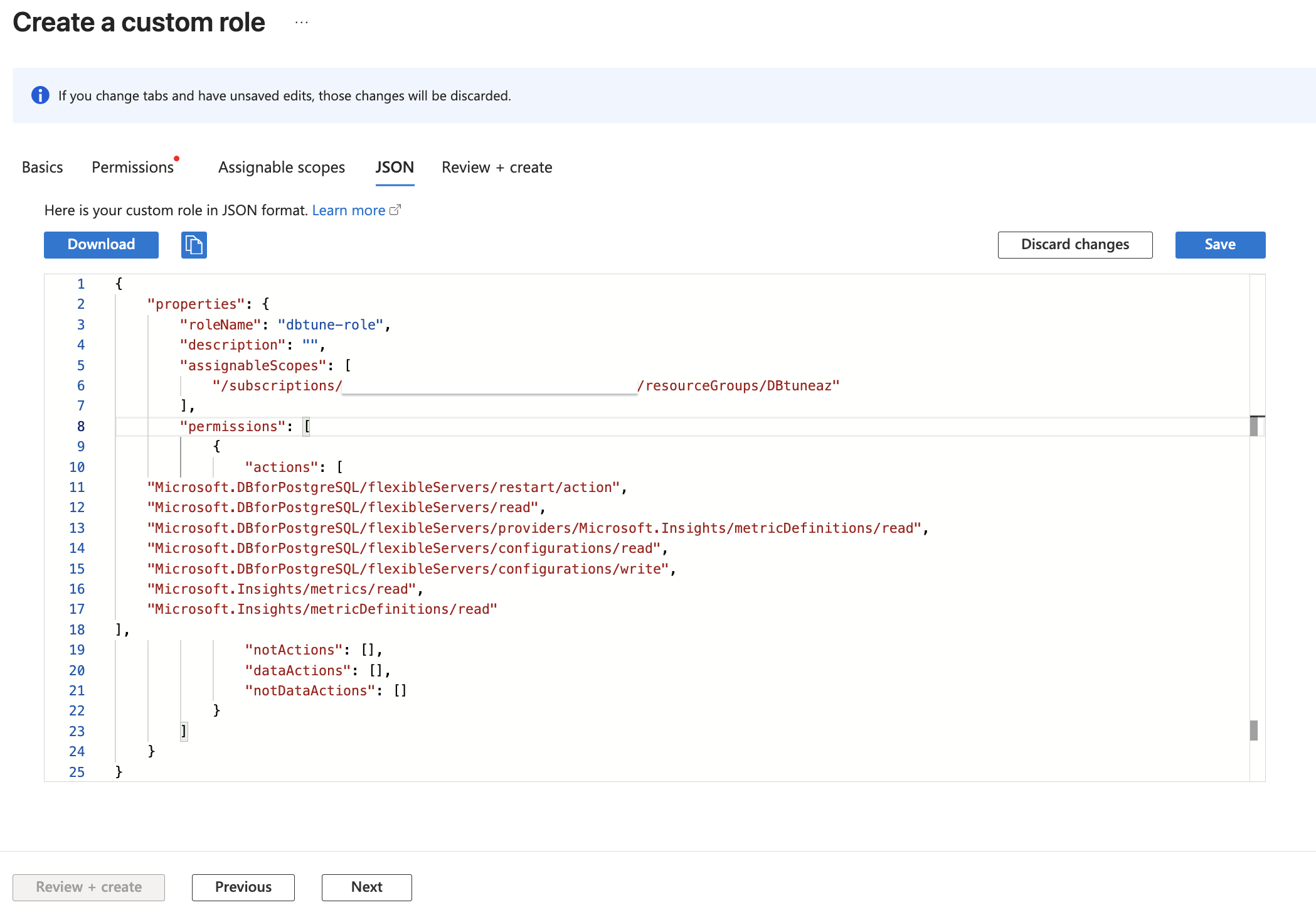
Next, navigate to the JSON tab and click Edit to enable the JSON field. Copy the below required permissions into the "actions" field.
"actions": [
    "Microsoft.DBforPostgreSQL/flexibleServers/restart/action",
    "Microsoft.DBforPostgreSQL/flexibleServers/read",
    "Microsoft.DBforPostgreSQL/flexibleServers/providers/Microsoft.Insights/metricDefinitions/read",
    "Microsoft.DBforPostgreSQL/flexibleServers/configurations/read",
    "Microsoft.DBforPostgreSQL/flexibleServers/configurations/write",
    "Microsoft.Insights/metrics/read",
    "Microsoft.Insights/metricDefinitions/read"
]
Click Save, then Next, and finally Create:
You can also assign it through Azure CLI, Create a json file with the roles mentioned above and assignable scope(/subscriptions/<subscription_id>/resourceGroups/<resource_group_name>).
Run the following command:
az role definition create --role-definition dbtune-role.json
The custom role is now defined with the necessary permissions.
Now, we will assign the custom role to the managed identity. This step links the specific permissions defined in the custom role to the Virtual machine, allowing the dbtune agent to operate.
Step 5
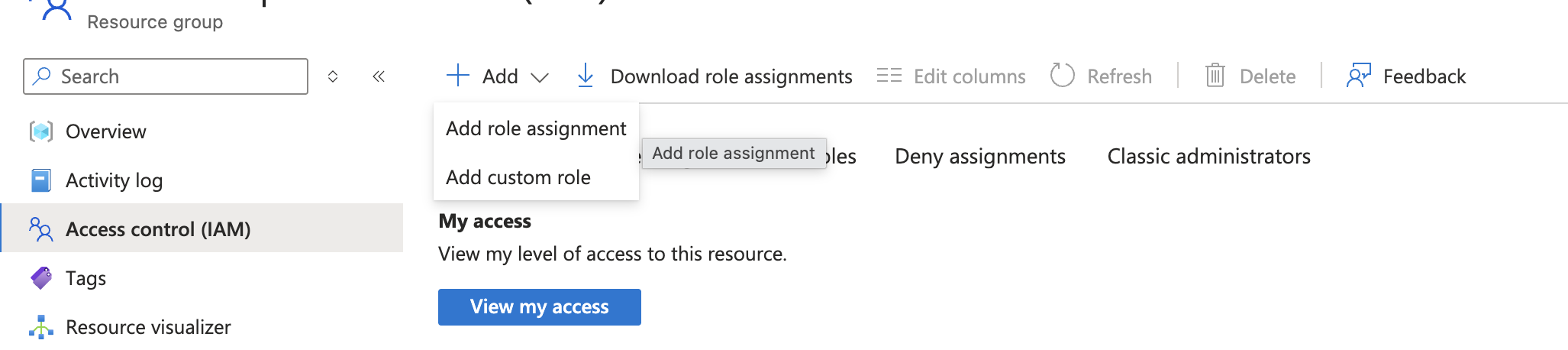
Next, Navigate to Azure Database for PostgreSQL flexible Server Resource Group. Open Access control (IAM) add the role assignments :
In the Role section, search for the custom role you created, select and click Next:
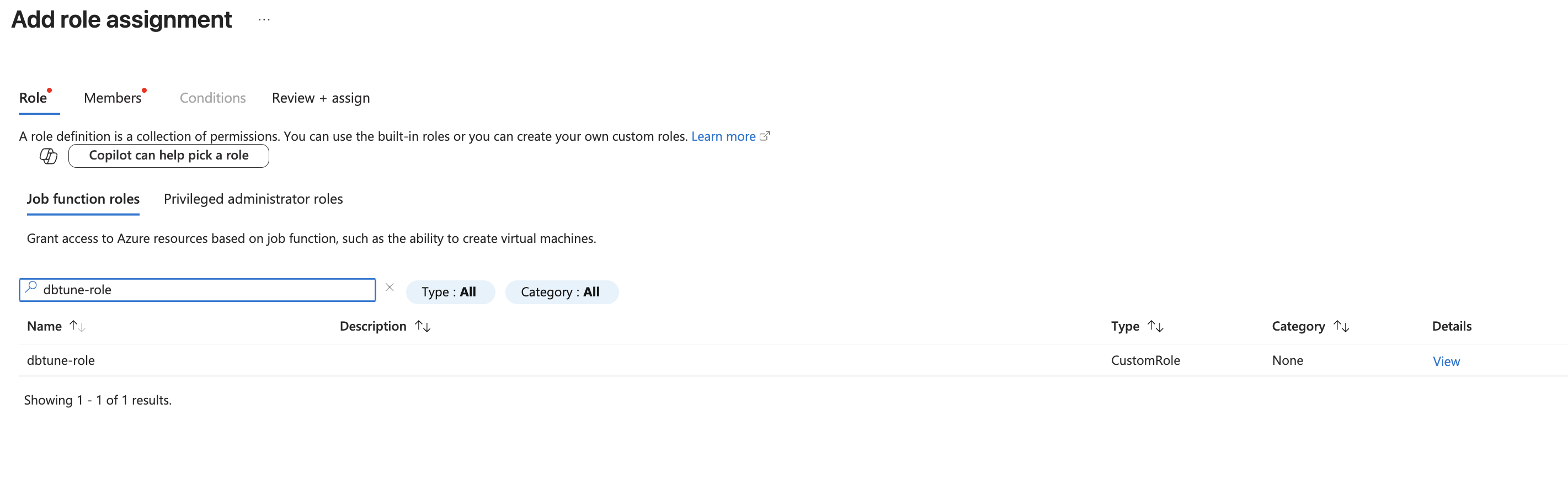
On the next screen, select Managed identity.
Click Select members, Under Managed identity choose the VM where you'll run the DBtune agent, then click Review + assign to assign the role:
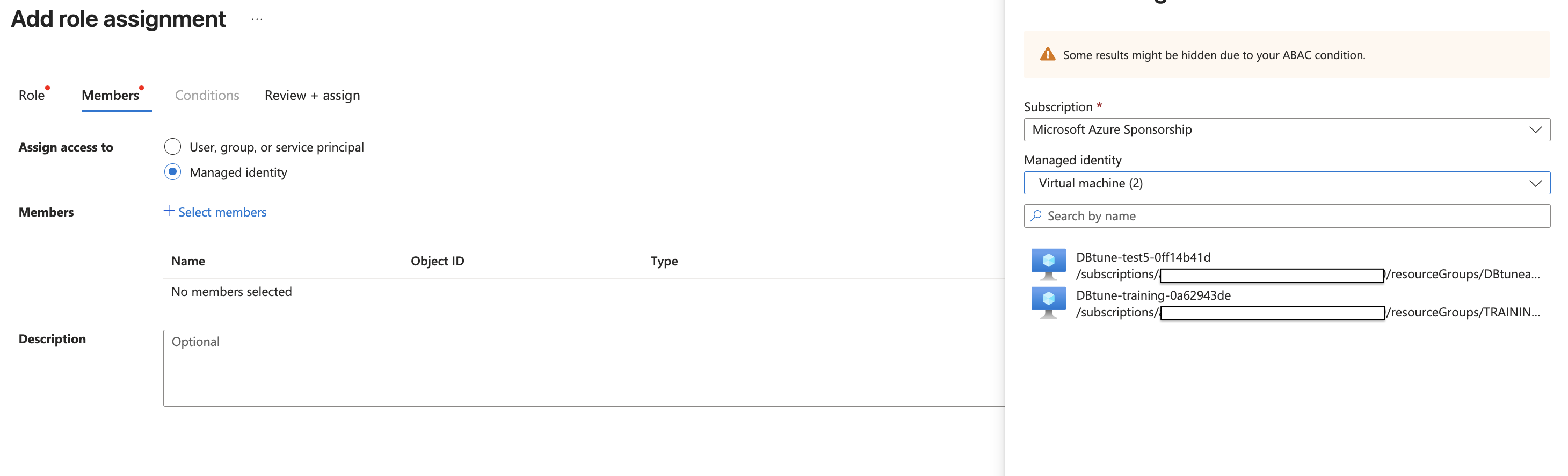
You can run it through Azure CLI:
Check the Principal ID:
az vm identity show \
  --resource-group <VM resourcegroup> \
  --name <VM name>
Assign the role:
az role assignment create \
  --assignee <VM_PRINCIPAL_ID> \
  --role "Custom role you created" \
  --scope /subscriptions/<subscription_id>/resourceGroups/<Flex_DB_Resourcegroup>
Step 6
Copy the below curl command and run it on your Linux VM to install the DBtune agent.
curl https://raw.githubusercontent.com/dbtuneai/dbtune-agent/refs/heads/main/setup.sh > /tmp/dbtune-agent.sh && sh /tmp/dbtune-agent.sh
Step 7
Create a dbtune.yaml file on your VM and copy the contents below.
Add your Azure flexible Server details—subscription_id, resource_group_name, server_name, and connection_url (You can find these details in the Azure portal)
Copy the api_key and database_id from the Agent setup page on https://app.dbtune.com
Example yaml.config file:
# Example config file for Azure Database for PostgreSQL flexible server
postgresql:
  connection_url: "postgresql://dbtune_agent:password@your-server.postgres.database.azure.com:5432/<dbname>"
  # For Microsoft Entra authentication: postgresql://<entra-username>@your-server.postgres.database.azure.com:5432/<dbname>
  include_queries: true

azure_flex:
  subscription_id: "<your-subscription-id>"
  resource_group_name: "<your-resourcegroup-name>"
  server_name: "<your-azure-db-server-name>"
  auth_method: postgres  # set to "entra" for Microsoft Entra authentication

dbtune:
  server_url: https://app.dbtune.com
  api_key: <copy-from-app-settings>
  database_id: <copy-from-app-settings>

debug: false
Finally, run the DBtune agent on your Linux VM. You can use the screen feature to keep it running in the background. To detach the screen session, press Ctrl + A, then D.
screen

./dbtune-agent --azure-flex
Alternatively run the DBtune agent using Docker with PostgreSQL flexible server-specific configuration:
docker run --restart always \
    -e DBT_POSTGRESQL_CONNECTION_URL="postgresql://..." \
    -e DBT_AZURE_FLEX_SUBSCRIPTION_ID=your-subscription-id \
    -e DBT_AZURE_FLEX_RESOURCE_GROUP_NAME=your-resource-group-name \
    -e DBT_AZURE_FLEX_SERVER_NAME=your-flexible-server-name \
    -e DBT_AZURE_FLEX_AUTH_METHOD=postgres \
    -e DBT_DBTUNE_SERVER_URL=https://app.dbtune.com \
    -e DBT_DBTUNE_API_KEY=your-dbtune-api-key \
    -e DBT_DBTUNE_DATABASE_ID=your-dbtune-database-id \
    public.ecr.aws/dbtune/dbtune/agent:latest
The best way to continue your local testing using Docker is the following:
- Setup a Service principal that uses the role you created earlier for the DBtune agent. This can be done from the az cli if you have the right level of permissions on the subscription. First make sure you are logged in for the correct subscription, and then run:
az ad sp create-for-rbac --name <custom_name> --role <name-of-your-custom-role> --scopes /subscriptions/<subscription_id>/resourceGroups/<resource_group_name>
For the scope that the permissions should apply over, this scope has to contain the Azure Database for PostgreSQL flexible server, and cannot be larger than the assignable scopes of the role. From memory, your role was assignable across the subscription, so you could use /subscriptions/<YOUR_SUBSCRIPTION_ID>.
The command will output a JSON blob if successful with at least following the keys: appId, password, tenant. These are the credentials the DBtune agent needs and you will need to save these. Here is the Microsoft documentation for this step if you need further information.
- Pass the Service principal’s credentials into docker as extra environment credentials, the agent will then be able to use them. Using everything you had earlier, add the following lines before the name of the image:
docker run \
...
-e AZURE_CLIENT_ID=<value of appId from last step> \
-e AZURE_CLIENT_SECRET=<value of password from last step> \
-e AZURE_TENANT_ID=<value of tenant from last step> \
public.ecr.aws/dbtune/dbtune/agent:latest
For information about common environment variables (DBT_DBTUNE_* and DBT_POSTGRESQL_*), see agent overview - common environment variables.
Azure Database for PostgreSQL flexible server-specific environment variables
| Variable | Description |
|---|---|
DBT_AZURE_FLEX_SUBSCRIPTION_ID | The ID of the Azure subscription that your PostgreSQL flexible Server instance is in. |
DBT_AZURE_FLEX_RESOURCE_GROUP_NAME | The name of the Resource Group that your PostgreSQL flexible Server instance is in. |
DBT_AZURE_FLEX_SERVER_NAME | The name of your PostgreSQL flexible server instance. |
DBT_AZURE_FLEX_AUTH_METHOD | Authentication method for the agent to connect to PostgreSQL. Set to entra to use Microsoft Entra authentication (token-based, no password required). Defaults to postgres (password authentication). |
Parameters tuned
DBtune supports multiple tuning modes that determine which parameters can be optimized. For a detailed explanation of tuning modes, see tuning modes.
Reload-only tuning mode
The following parameters are tuned in reload-only mode:
work_memrandom_page_costseq_page_costcheckpoint_completion_targeteffective_io_concurrencymax_parallel_workers_per_gathermax_parallel_workersmax_wal_sizemin_wal_sizebgwriter_lru_maxpagesbgwriter_delaydefault_statistics_targetmax_parallel_maintenance_workers
Restart tuning mode
Currently, restart tuning mode is not supported for Azure Database for PostgreSQL flexible server.